A Bond Beyond Comedy: Why Losing Rob Reiner Feels Like Losing a Piece of Mel Brooks’ Soul
The bond between Mel Brooks and Rob Reiner was never a typical Hollywood friendship. It was something deeper, quieter, and far more enduring — a relationship shaped not by fame or collaboration, but by family-level loyalty and a shared lifetime of laughter that stretched back generations.
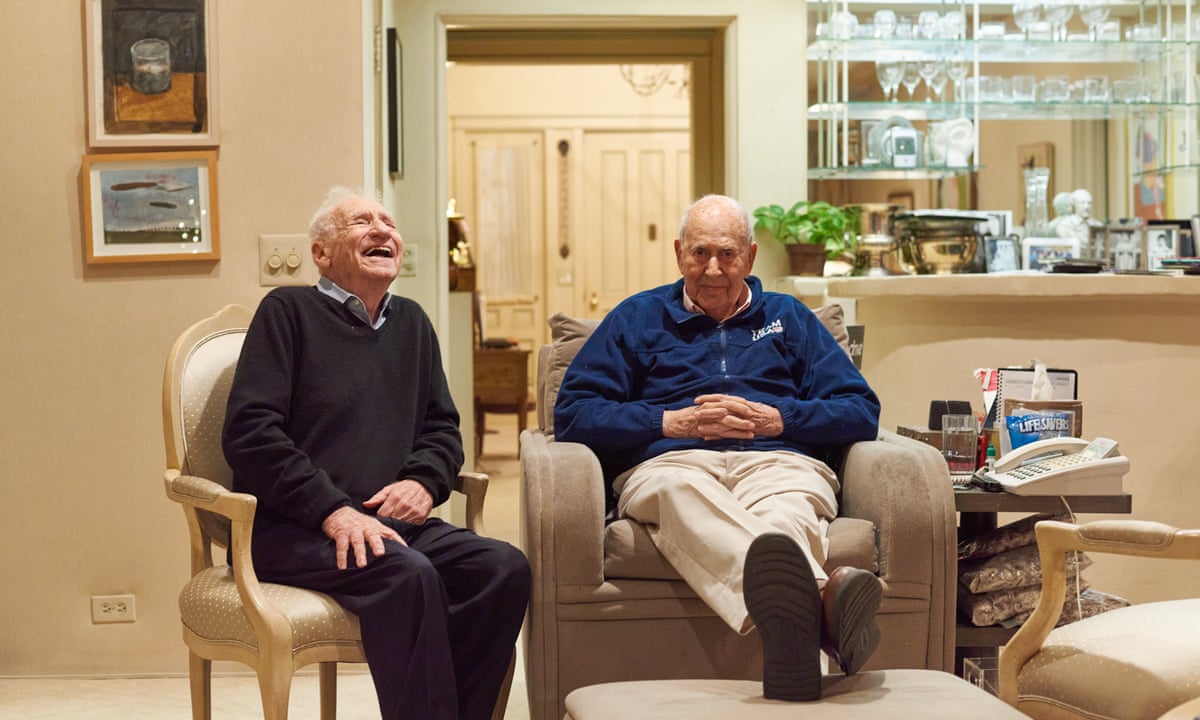
At the heart of that bond was Mel’s legendary friendship with Rob’s father, Carl Reiner. For more than seventy years, Mel and Carl were inseparable. In their later years, their devotion to one another became almost ritualistic: every single night, without fail, they ate dinner together and watched movies side by side. No business agenda. No public performance. Just two old friends, still laughing, still connected, still choosing each other.
Because of that lifelong brotherhood, Mel didn’t merely know Rob Reiner — he watched him grow up. He saw him as a boy running around comedy rooms, absorbing timing and wit like oxygen, long before Rob ever became a director, producer, or cultural force. To Mel, Rob was never just a peer. He was family.

That’s why losing Rob feels different. More final. More personal.
Those close to Mel say this loss cuts especially deep because Rob was the last living echo of Carl — the final bridge to decades of shared jokes, late-night dinners, and a shorthand language built on a lifetime of trust. With Rob gone, that echo fades into memory, leaving Mel alone as the keeper of a story no one else fully remembers.
Behind the scenes, Mel and Rob shared a dynamic that blended mentorship, pride, and teasing in a way only family can manage. Mel was famously Rob’s toughest critic and his loudest cheerleader — sometimes within the same sentence. When Rob began directing films that would later be regarded as classics, including This Is Spinal Tap and The Princess Bride, Mel was often among the first to see early cuts.
He took immense joy in watching “the kid” exceed expectations.
Friends recall Mel joking that Rob was the only person alive allowed to be funnier than him — a statement that, coming from Mel Brooks, was the highest praise imaginable. There was pride there, but also something gentler: the satisfaction of seeing a legacy continue, not through imitation, but evolution.
In rooms filled with industry legends, Mel and Rob often drifted toward each other instinctively, slipping into their own private corner. They spoke a language of memories and jokes that traced all the way back to the 1950s — references no one else quite caught, laughter that didn’t need explanation.
Today, the sadness Mel carries reflects a life defined by loyalty. For a man who has outlived so many contemporaries, Rob was not only a reminder of the past, but a reassurance of continuity — proof that the values Carl embodied still lived on in the next generation.
Their conversations were never just about movies or comedy. They were about life, family, aging, and the quiet belief that humor is how we survive loss. Now, as Mel navigates a new chapter without the Reiner family by his side, the comedy world stands with him — not laughing, but listening.
This moment marks the end of a legendary lineage. And it leaves Mel Brooks, still standing, as the guardian of an extraordinary treasury of stories — memories forged in nightly dinners, shared films, and decades of laughter that once echoed between three men who defined comedy itself.
Some friendships shape careers.
Others shape lives.
This one did both — and its absence will be felt for generations.